
Fire Door Inspections, Remedials and Installation
Clear Surveys. Practical Remedials. Documented Results.
Safe City Fire Protection Ltd provides professional fire door inspections, detailed surveys, remedial works, upgrades, maintenance and complete fire door installation services for residential, commercial and managed buildings across Hampshire, Dorset and the South Coast.
We support managing agents, landlords, care providers, facilities managers, contractors and Responsible Persons by identifying fire door defects, establishing clear priorities and providing practical recommendations, photographic evidence and documented records.
Our fire door inspection capability is supported by recognised ABBE Level 3 fire door inspection qualifications, Fire Protection Association inspection methodology and more than 10 years of practical experience across fire door inspection, installation, maintenance, remedial works and passive fire protection.
Fire door inspections, installation and maintenance are undertaken using a structured, evidence-led approach, with regard to the agreed specification, relevant manufacturer instructions, recognised industry guidance and applicable fire safety requirements.
ABBE Level 4 Fire Risk Assessor | ABBE Level 3 Fire Door Inspection | MCIOB | MIFSM | NVQ Level 6 | BA Construction Site Management | SMSTS | CSCS Gold Supervisor | NVQ Passive Fire Protection | ROCKWOOL FirePro Trained | Fire Door and Passive Fire Protection Specialists | 10+ Years’ Industry Experience
Fire Doors, Inspections and Upgrades - Made Clear
What Is a Fire Door?
A fire door is a purpose-designed doorset intended to resist the spread of fire and, where required, smoke for a specified period. It helps protect escape routes, maintain compartmentation and reduce the movement of fire and smoke through a building.
A complete fire doorset may include the door leaf, frame or lining, intumescent and smoke seals, hinges, self-closing device, latch, glazing, ironmongery, threshold details and the interface between the frame and surrounding wall. These elements must be suitable, compatible and correctly installed to work together as a complete system.
The required performance of a fire door depends on its location, the surrounding construction and the building’s fire safety strategy. Typical classifications include FD30, FD30S, FD60 and FD60S, but the correct requirement must be established from the available fire strategy, specification, building information or competent technical assessment.
How Often Should Fire Doors Be Checked?
Fire doors should be inspected at suitable intervals to confirm that they remain in effective working order and that damage, wear, alterations or missing components are identified before they affect performance.
For multi-occupied residential buildings in England with a top storey more than 11 metres above ground level, the Fire Safety (England) Regulations 2022 require communal fire doors to be checked at least every three months. Responsible Persons must also use best endeavours to check flat entrance fire doors at least every 12 months.
For other residential, commercial and managed buildings, inspection frequency should be determined through the fire risk assessment and ongoing fire safety management arrangements. Factors may include the door’s location, level of use, condition, previous defects, risk profile and likelihood of damage.
High-use doors, doors serving protected routes and doors exposed to repeated impact or misuse may require more frequent checks.
What Can Affect Fire Door Performance?
A fire door may appear generally sound while still containing defects that affect its expected performance.
Common concerns include:
- excessive or uneven gaps;
- damaged or missing intumescent and smoke seals;
- ineffective self-closing devices;
- unsuitable hinges, screws or ironmongery;
- damaged glazing or glazing systems;
- excessive threshold gaps;
- unapproved alterations or penetrations;
- damage to the leaf, frame or surrounding construction;
- unsuitable repairs or incompatible replacement components;
- poor frame-to-wall fire stopping.
Need a Clear Fire Door Assessment?
SCFP can inspect existing fire doors, identify visible defects and provide clear findings, photographic evidence and practical recommendations. Where the required door rating, compartment line or strategic function cannot be confirmed, we will identify the need for further technical clarification rather than making unsupported assumptions.
Fire Door Surveys and Inspections
What Is a Fire Door Survey?
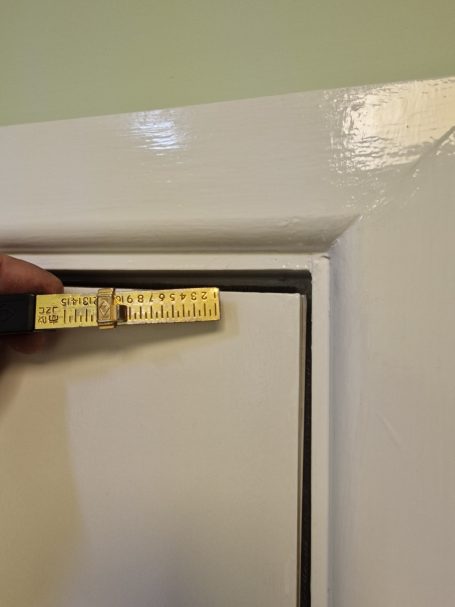
A fire door survey is a structured inspection of existing fire doors and doorsets to assess their visible condition, operation and key components. It identifies defects, damage, missing components, unsuitable alterations and other issues that may affect the expected fire and smoke performance of the doorset.
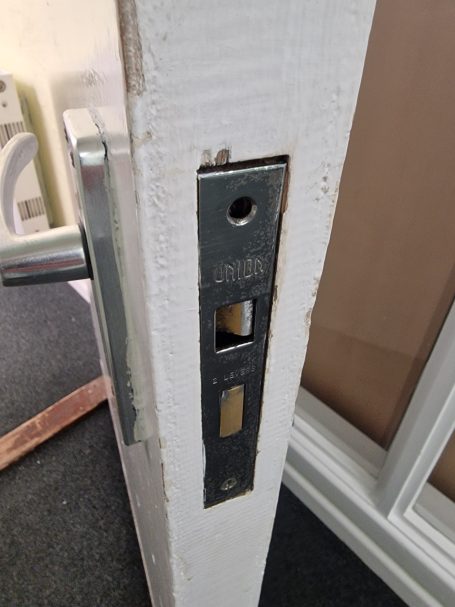
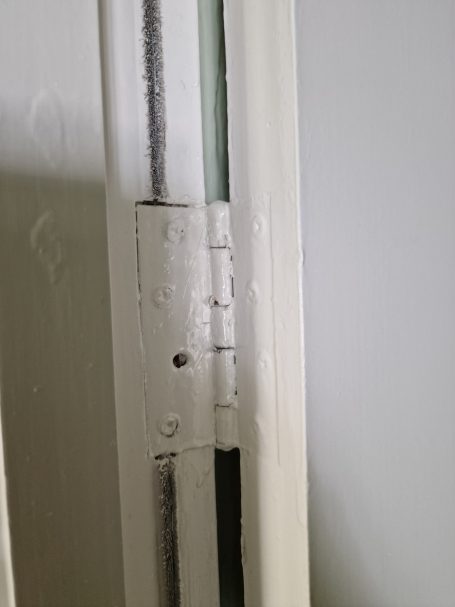
The survey may examine the door leaf, frame or lining, perimeter gaps, threshold, hinges, self-closing device, latch, ironmongery, intumescent and smoke seals, glazing, signage and the visible interface between the frame and surrounding wall.
SCFP carries out fire door surveys using an evidence-led approach supported by recognised ABBE Level 3 fire door inspection qualifications, Fire Protection Association inspection methodology and extensive practical experience in fire door installation, maintenance, remedial works and passive fire protection.
Why Is a Fire Door Survey Important?
Fire doors can become damaged, altered or ineffective through everyday use, impact, wear, unsuitable repairs or changes to their components. Some defects are immediately visible, while others may only become clear during a structured inspection.
A professional fire door survey helps the Responsible Person understand the current condition of the doors, identify priorities and plan appropriate maintenance, remedial works, further investigation or replacement where necessary.
A survey is particularly valuable where:
- a fire risk assessment has identified fire door concerns;
- no current fire door inspection records are available;
- doors have been damaged, altered or repeatedly repaired;
- gaps, seals, closers or ironmongery appear defective;
- a building has undergone refurbishment or a change of use;
- remedial works need to be accurately scoped and budgeted;
- an updated door asset record is required.
What Will You Receive After the Survey?
The reporting format is agreed according to the building, number of doors and purpose of the survey. Where required, each door can be assigned a unique reference and recorded individually.
The report can include:
- door location and reference;
- visible condition and operational findings;
- identified defects and compliance concerns;
- photographic evidence;
- priority or risk-based categorisation;
- practical remedial recommendations;
- items requiring further technical clarification;
- a structured schedule to support budgeting and remedial planning.
This provides a clear record for Responsible Persons, managing agents, facilities managers, landlords and contractors, helping them understand the findings and progress the required actions.
Can a Fire Door Survey Confirm Every Door Rating?
Not always. A fire door survey can assess the visible condition, operation and identifiable features of the existing doorset, but it does not automatically establish the design requirement for every opening.
The required rating may depend on the building’s fire strategy, compartment boundaries, protected escape routes, surrounding construction and approved building information. Where this information is missing or unclear, SCFP will identify the need for further technical clarification rather than assigning an unsupported FD30, FD30S, FD60 or FD60S classification.
How Do I Arrange a Fire Door Survey?
Send SCFP the site location, approximate number of doors and any available fire risk assessment, previous inspection report, door schedule, drawings or photographs.
We will review the information, identify anything further required and confirm the appropriate survey scope, access requirements, reporting format and next steps.
Fire Door Remedial Works
What Are Fire Door Remedial Works?
Fire door remedial works are targeted repairs and adjustments carried out to address identified defects in an existing fire door or doorset where a suitable, evidence-based repair is technically justified.
Following an inspection, remedial work may include adjustments to the door leaf, frame, hinges, closer or latch; replacement of compatible intumescent or smoke seals; correction of suitable perimeter or threshold gaps; repair or replacement of appropriate ironmongery; signage; and treatment of the visible frame-to-wall interface where required.
Not every defective fire door can or should be repaired. The door leaf, frame, supporting construction, components, damage, available evidence and overall condition must be considered before deciding whether remedial work, further investigation or complete replacement is appropriate.
Why Are Fire Door Remedial Works Important?
Defects such as excessive or uneven gaps, damaged or missing seals, ineffective self-closing devices, poor latching, loose hinges or unsuitable ironmongery can prevent a fire door from operating as intended. Timely remedial work helps address identified defects before further deterioration occurs.
Suitable remedial work can help to:
- address clearly identified defects using appropriate methods and compatible components;
- improve reliable closing, latching, alignment and sealing;
- support the continued use of suitable existing doorsets where repair is technically justified;
- reduce avoidable disruption and unnecessary replacement costs;
- extend the service life of suitable doors where appropriate;
- provide a clearer basis for documented close-out and ongoing maintenance;
- identify when further investigation or complete replacement is required.
Do You Need Fire Door Remedial Works?
Where a fire door inspection, fire risk assessment or existing audit has identified defects, SCFP can review the findings, confirm the appropriate remedial scope and carry out technically justified repairs using suitable methods and compatible components.
On completion, we can provide photographic evidence, a schedule of works completed and clear records to support the client’s fire safety documentation and ongoing maintenance arrangements.
Fire Door Installations
What Does Fire Door Installation Involve?
Fire door installation involves fitting a complete fire-resisting doorset in accordance with the confirmed specification, supporting evidence, relevant manufacturer instructions and the requirements of the opening and surrounding construction.
The complete installation may include the door leaf, frame or lining, intumescent and smoke seals, hinges, self-closing device, latch, glazing, threshold details and other essential ironmongery. These elements must be suitable, compatible and installed correctly so that they function together as a complete doorset.
Our team has experience working within recognised third-party certification environments, including BM TRADA Q-Mark and IFC/Kiwa passive fire protection standards. This experience supports a controlled approach to product compatibility, workmanship, installation records, photographic evidence and documented completion.
Why Is Correct Fire Door Installation Important?
The expected fire and smoke performance of a doorset depends on the complete system being suitable for the opening and installed in accordance with its specification and supporting instructions. Poor fitting, excessive gaps, unsuitable components or incorrect installation details can undermine the intended performance of the doorset.
A controlled fire door installation helps to:
- maintain appropriate perimeter and threshold gaps;
- achieve reliable alignment, closing and latching;
- ensure that compatible doorset components are used together;
- follow the confirmed specification and relevant manufacturer instructions;
- address the interface between the frame and surrounding construction;
- maintain the intended fire and smoke-control performance;
- provide clear installation records, photographic evidence and completion information.
Do You Need Professional Fire Door Installation?
Where a new or replacement fire doorset is required, SCFP can review the available specification, building information and site conditions before confirming the appropriate installation scope.
Our fire door installation service can include the complete doorset, frame or lining, seals, compatible ironmongery, frame-to-wall interface and associated finishing works. On completion, we can provide photographic evidence, installation records and a clear schedule of the work undertaken.
Fire Door Upgrades
What Are Fire Door Upgrades?
Fire door upgrades are targeted improvements made to an existing door or doorset where its construction, condition and available supporting evidence justify an upgrade approach.
Depending on the doorset and identified defects, suitable work may include adjustments to gaps, alignment, closing or latching; replacement of compatible hinges, seals or ironmongery; installation of appropriate signage; treatment of suitable frame-to-wall interfaces; and other evidence-led improvements.
An upgrade must not be treated as an automatic alternative to replacement or as proof that an existing door has achieved a new fire-resistance rating. The door leaf, frame, components, supporting construction, existing damage and available evidence must be assessed before deciding whether upgrade work, further investigation or complete replacement is appropriate.
When Is a Fire Door Upgrade Appropriate?
A fire door upgrade may be appropriate where an inspection has identified specific defects, but the existing door leaf, frame and essential components remain suitable for continued use.
The proposed work must be technically justified and supported by the available doorset information, product evidence, manufacturer instructions, competent assessment or an agreed remedial specification.
Where suitable, upgrade work may help to:
- address clearly identified inspection findings;
- improve reliable closing, latching, alignment and sealing;
- retain suitable existing door leaves and frames;
- replace inappropriate or defective components with compatible alternatives;
- reduce unnecessary disruption and avoidable replacement costs;
- extend the service life of suitable existing doorsets;
- provide clearer completion and maintenance records.
Does a Fire Door Upgrade Confirm a New Fire Rating?
No. Upgrade work does not automatically certify an existing door or confirm that it has achieved an FD30, FD30S, FD60 or FD60S classification.
The required fire and smoke performance must be established from suitable evidence, such as the building’s fire strategy, doorset documentation, approved specification, product information or competent technical assessment. Where the evidence is incomplete, the limitations must be recorded and further investigation may be required.
Can Your Existing Fire Doors Be Upgraded?
SCFP can assess the existing doorset, review the identified defects and available evidence, and determine whether targeted remedial or upgrade work may be suitable.
Where an upgrade cannot be technically justified, we will explain whether further investigation, additional supporting information or complete doorset replacement should be considered.
Evidence-Led Fire Door Reports and Remedial Support
Our reports are designed to help clients understand each identified defect, its location, the recommended priority and the likely next action.
Depending on the agreed scope, reporting can include door references, itemised observations, photographic evidence, condition findings and prioritised remedial recommendations. This supports maintenance planning, contractor scopes, audit trails and ongoing fire safety management.
Where suitable remedial work is completed, we can also provide completion records and supporting photographs to help maintain a clear record from inspection through to remedial action.
Fire-Rated Access Hatches and Glazing
Fire Access Hatches and Fire-Rated Windows
Fire-rated access hatches and glazing may form part of a fire-resisting wall, ceiling, partition, screen or doorset. They must be appropriately specified for the location and compatible with the surrounding construction.
Access hatches can provide entry to service voids or compartments while maintaining the required fire-resisting construction. Fire-rated glazing can provide visibility within doors, screens or partitions where the complete tested or assessed system permits it.
Suitability depends on the required fire resistance, supporting construction, aperture dimensions, fixing method, glazing system, compatible components and manufacturer instructions. Incorrect products or installation details can compromise the surrounding compartmentation.
We can review existing installations and support the supply and installation of suitable systems where the specification, supporting evidence and site conditions are clearly established.
Compliance and Requirements
Fire-rated hatches and glazing must comply with current fire safety legislation, including the Regulatory Reform (Fire Safety) Order 2005, and be installed in line with relevant standards such as BS 476 and BS EN 1634.
Any openings within fire-resisting construction must maintain the required fire rating. Incorrect installation or non-compliant products can compromise compartmentation and lead to failure in the event of a fire.
Need Advice or Installation?
If you require fire-rated hatches or glazing, or need to check existing installations, we can assess, supply, and install compliant systems to ensure your building remains protected and meets current requirements.
Fire Door Services Across Hampshire and Dorset
Based in the Southampton area, Safe City Fire Protection Ltd provides fire door inspections, surveys, remedial works, upgrade works and installation support across Hampshire, Dorset and the South Coast.
Our core coverage includes Southampton, Eastleigh, Winchester, Portsmouth, Fareham, Romsey, Salisbury, Bournemouth, Poole, Christchurch, Ringwood and Basingstoke. Wider commercial, contractor-led and multi-site enquiries are also considered where suitable.
Fire Door Frequently Asked Questions
What is included in a fire door inspection?
A fire door inspection can include the door leaf, frame, gaps, hinges, intumescent and smoke seals, self-closing device, latch, glazing, signage, ironmongery and general condition. The agreed report can record defects, photographs and recommended next actions.
Can defective fire doors be repaired?
Some fire doors can be repaired or improved through suitable remedial work, but this depends on the door leaf, frame, components, damage, available evidence and overall condition. Where a defensible repair is not possible, replacement or further assessment may be required.
Do you provide fire door remedial works after an inspection?
Yes. We can review inspection findings, agree a suitable scope and carry out appropriate remedial work. Completion records and photographic evidence can also be provided where required.
Which buildings do you inspect?
We inspect fire doors in residential blocks, care homes, schools, nurseries, universities, healthcare premises, offices, commercial buildings and other managed properties.
Need Fire Door Inspection or Remedial Support?
Contact Safe City Fire Protection Ltd to discuss fire door inspections, surveys, remedial works, upgrades or installation requirements for your building.
We support managing agents, landlords, care homes, contractors and commercial clients across Hampshire, Dorset and the South Coast, with wider project enquiries considered where suitable.